 These red blocks along the path of Hurricane Matthew are Airspace Coordination Areas. See the full NOTAM 6/5073

Friday, October 07, 2016
Hurricane Matthew Notam
These red blocks along the path of Hurricane Matthew are Airspace Coordination Areas. See the full NOTAM 6/5073
Monday, September 26, 2016
Sarasota area Flight Instructor
BFR, IPC or maybe you need a safety pilot?
 Instruction in your plane when you have time for it, on the weekends. Do you need to complete your BFR, IPC , need a safety pilot? Would your flying companion like to get more comfortable when they going flying with you?
Please email me at userightrudder@gmail.com to set up a time to accomplish your goal.
Sunday, June 22, 2014
QR codes on VFR sectionals
Actually the QR codes are on all of the charts, not just the sectionals.
The QR code is an easy, quick book mark for looking up updated changes since you bought your chart and more very good pre-flight items. Below the video see the web page the QR code will take you.
------------------------------------------------------------------------------------------------------------
VFR Charting
NOTAMs - are notices filed with an aviation autority to alert pilots of potential hazards along a route of flight or at a location that could affect the safety of the flight.
Temporary Flight Restrictions (TFRs) - are issued by the NOTAM System to restrict certain aircraft from operating within a defined area on a temporary basis to protect persons or property in the air or on the ground.
Safety Alerts and Charting Notices - are notices regarding charting products currently in effect that may not be NOTAM worthy.
VFR Chart Update Bulletins - provides major changes in aeronautical information that have occurred since the last publication date of each Sectional, TAC, and Helicopter Route Chart listed.
VFR Class B Enhancement Graphics - provides graphics designed to increase safety and aid pilots in gaining situational awareness within existing and redesigned Class B areas.
A/FDs, Alaska & Pacific Supplements - provides airport, communication and NAVAID information.
Alaska Wx Cameras - Servicing 190 Alaska locations on a near real-time basis.
Aeronautical Chart User's Guide - contains a listing of charting symbols used on each AeroNav product and its meaning.
Frequently Asked (Visual) Questions - contains a listing of frequently asked questions and answers.
Wednesday, October 16, 2013
Introductory Flight

Have fun and get you questions answered on your introductory experience.
What's included?
- 15 min preflight briefing
- 30 minutes flight - hands on once we are straight and level
- Logbook with time accredited
Schedule with me at userightrudder@gmail.com
Price $200 - share your flight with a friend (in the back seat) at no extra cost.
Tuesday, October 01, 2013
Roger, Roger. - and other cool pilot talk
The other day flying around I responded to the controller with "Thanks" when the controller confirmed I could do something I asked for. Now it isn't wrong once in a while to say Thanks, in fact it is nice! However there is a definite way to say what you need in most cases and they don't follow normal conversation/grammar rules. Here is what I use as a guide.
Part of the AIM is the Pilot/Controller glossary. It is similar to an aviation dictionary. However, the meaning of words that we use flying may not be what them mean when we are not flying.
Roger seems to be one of those words that can be misused. "Roger" means - I have received all of your last transmission. That is all it means. It is not an answer to a questions requiring a yes or no answer. If you or the controller want to say yes then you would use the word "Affirmative".
Should you read the Pilot/Contoller glossary? -Affirmative! The most often used terms are in BOLD letters.
--------------------------------------------------------------------------------------------------------------
Roger, Roger. What's your Vector, Victor?

- Think - what are you going to say, have it planned out
- Listen (wait) - make sure you are not talking over someone else's transmission (aka "stepping on someone else")
- Talk - be concise , follow the Pilot/Controller Glossary when able and if not just communicate so everyone understands
With time ,like everything else in life, you find your pace and will anticipate what to say at what moment, and what the controller might say too and be ready to respond. check out liveatc.net to hear pilots and aircraft controllers for example Punta Gorda @ http://www.liveatc.net/search/?icao=KPGD
Part of the AIM is the Pilot/Controller glossary. It is similar to an aviation dictionary. However, the meaning of words that we use flying may not be what them mean when we are not flying.
Roger seems to be one of those words that can be misused. "Roger" means - I have received all of your last transmission. That is all it means. It is not an answer to a questions requiring a yes or no answer. If you or the controller want to say yes then you would use the word "Affirmative".
Should you read the Pilot/Contoller glossary? -Affirmative! The most often used terms are in BOLD letters.
--------------------------------------------------------------------------------------------------------------
Roger, Roger. What's your Vector, Victor?

Sunday, August 11, 2013
Be Prepared and be ahead of the plane
Another great resource is FAASafety.gov. You can see what is new and you can be alerted to safety seminars in your area and dozens of other resources can be sent to you via email after you set up when you create your account.

One of things I have set up in my account is to receive the FAA Safety briefing magazine online, that comes out every two months. The July/August 2013 issue of FAA Safety Briefing focuses on airman preparedness. Articles explore procedures, techniques, and equipment that can help you stay ahead of the aviation safety curve and prepare for the unexpected.

One of things I have set up in my account is to receive the FAA Safety briefing magazine online, that comes out every two months. The July/August 2013 issue of FAA Safety Briefing focuses on airman preparedness. Articles explore procedures, techniques, and equipment that can help you stay ahead of the aviation safety curve and prepare for the unexpected.
The subject of being prepared is one of my favorite.
Wednesday, July 03, 2013
Back home flying in Florida
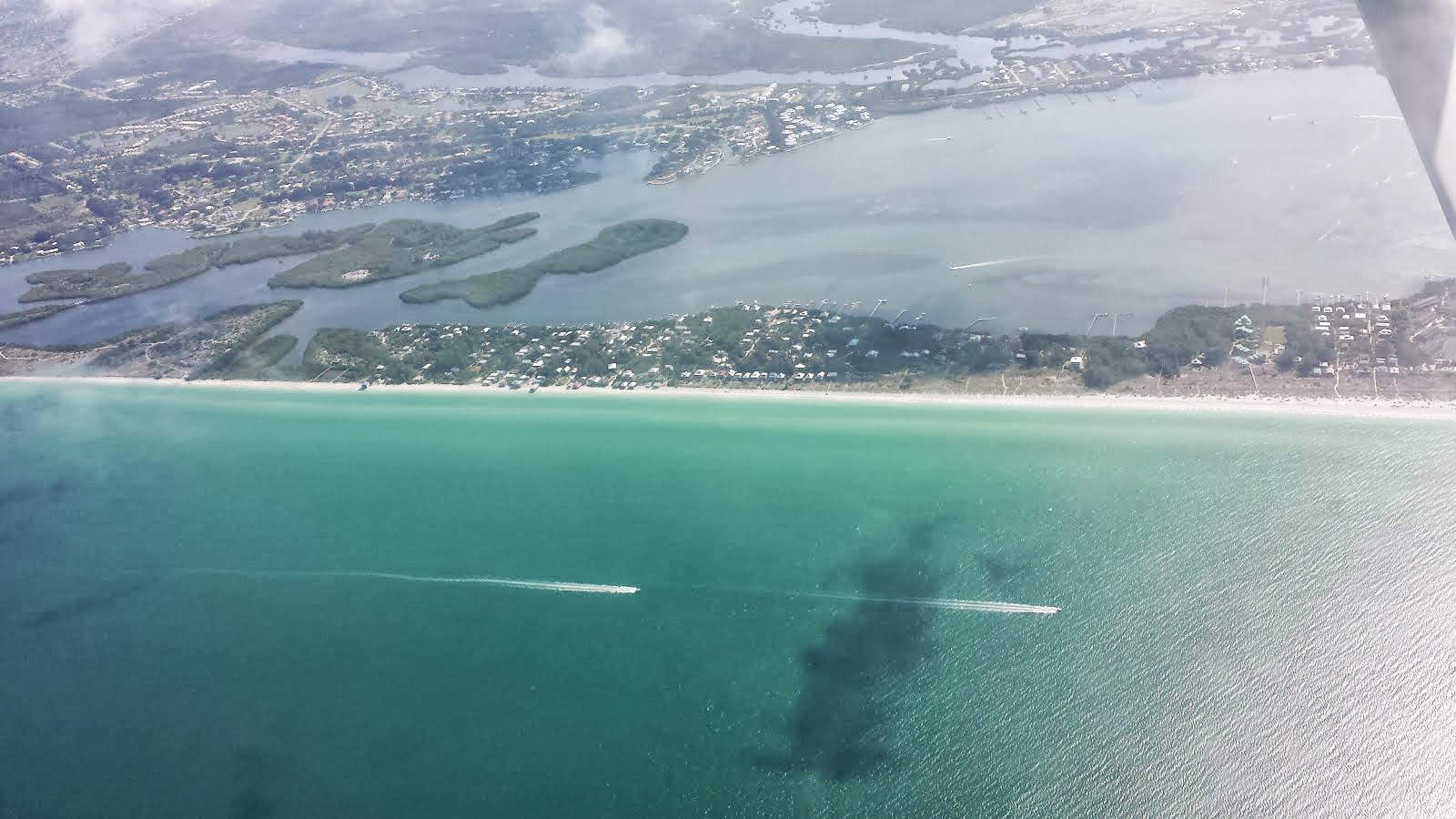
I keep pinching myself to think I am back in Florida and that I have the opportunity to see this everyday I am at work.
 I am currently working as part time instructor in Venice Florida and Worland Wy seems like a distant memory (we have only been here 3 weeks). But the flying is so different here , the adjustment has been immediate.
Checking the weather forecasts for me now tends to emphasize, not that the wind will be 30+ in the afternoon as much as ,when will the thunderstorms start. TAFs and the prognostic reports are what I can check right away to make my initial analysis of what may happen.
Saturday, February 16, 2013
What my week looked like in Worland!
 My jobs in Wyoming

1) I get to work with a great team w/ Great Lakes in Worland
2) I have the pleasure to instruct

3) flying pipeline survey

Saturday, December 22, 2012
Runway Incursions
This new chapter https://www.faasafety.gov/files/notices/2012/Jun/PHAK_-_Appendix_1.pdf addresses the runway incursions that occur frequently. It is important to plan ahead look at a taxi diagram as part of you preflight be ready for when you are at an unfamiliar airport .Know what the airport markings mean. The Aeronautical Information Manual Chapter 3 is a great place to find the answer to what it all means http://www.faa.gov/air_traffic/publications/atpubs/aim/aim0203.html BEFORE you go.
Merry Christmas!
The Night Before Christmas
for General
Aviators
 Twas the night before Christmas, and
out on the ramp,
Not an airplane was stirring, not even a Champ.
The aircraft were fastened to tiedowns with care,
In hopes that come morning, they all would be there.
The fuel trucks were nestled, all snug in their spots,
With gusts from two-forty at 39 knots.
I slumped at the fuel desk, now finally caught up,
And settled down comfortably, resting my butt.
When the radio lit up with noise and with chatter,
I turned up the scanner to see what was the matter.
A voice clearly heard over static and snow,
Called for clearance to land at the airport below.
He barked his transmission so lively and quick,
I'd have sworn that the call sign he used was "St. Nick".
I ran to the panel to turn up the lights,
The better to welcome this magical flight.
He called his position, no room for denial,
"St. Nicholas One, turnin' left onto final."
And what to my wondering eyes should appear,
But a Rutan-built sleigh, with eight Rotax Reindeer!
With vectors to final, down the glideslope he came,
As he passed all fixes, he called them by name:
"Now Ringo! Now Tolga! Now Trini and Bacun!
On Comet! On Cupid!" What pills was he takin'?
While controllers were sittin', and scratchin' their head,
They phoned to my office, and I heard it with dread,
The message they left was both urgent and dour:
"When Santa pulls in, have him please call the tower."
He landed like silk, with the sled runners sparking,
Then I heard "Left at Charlie," and "Taxi to parking."
He slowed to a taxi, turned off of three-oh
And stopped on the ramp with a "Ho, ho-ho-ho..."
He stepped out of the sleigh, but before he could talk,
I ran out to meet him with my best set of chocks.
His red helmet and goggles were covered with frost
And his beard was all blackened from Reindeer exhaust
His breath smelled like peppermint, gone slightly stale,
And he puffed on a pipe, but he didn't inhale.
His cheeks were all rosy and jiggled like jelly,
His boots were as black as a cropduster's belly.
He was chubby and plump, in his suit of bright red,
And he asked me to "fill it, with hundred low-lead."
He came dashing in from the snow-covered pump,
I knew he was anxious for drainin' the sump.
I spoke not a word, but went straight to my work,
And I filled up the sleigh, but I spilled like a jerk.
He came out of the restroom, and sighed in relief,
Then he picked up a phone for a Flight Service brief.
And I thought as he silently scribed in his log,
These reindeer could land in an eighth-mile fog.
He completed his pre-flight, from the front to the rear,
Then he put on his headset, and I heard him yell, "Clear!"
And laying a finger on his push-to-talk,
He called up the tower for clearance and squawk.
"Take taxiway Charlie, the southbound direction,
Turn right three-two-zero at pilot's discretion
He sped down the runway, the best of the best,
"Your traffic's a Grumman, inbound from the west."
Then I heard him proclaim, as he climbed thru the night,
"Merry Christmas to all! I have traffic in sight."
Sunday, November 04, 2012
Decode Abbreviations in NOTAMS
!WRL 09/003 WRL AD CLSD FIXED WING WEF 1209241400-1209260200 
ACTG acting GEN
ACTV active GEN
ACTVT activate GEN
ACW aircraft control and warning GEN
ACYC Anticyclonic NWS
AD Aerodrome ICAO
ADA advisory area ATC
ADAP Airport Development Aid Program GEN
ADC Aerodrome chart ICAO
ADCF Air Defense Control Facility GEN
ADCON advise or issue instructions to all
concerned
GEN
ADCUS advise customs GEN
ADDN addition GEN
ADE Air Defense Emergency GEN
ADF automatic direction finder GEN
ADFAP automatic direction finder approach ATC
ADIZ air defense identification zone GEN
ADJ adjacent GEN
Sunday, September 23, 2012
When to turn your transponder on?

Most checklists have you turn your transponder to "SBY" towards the end of the engine start checklist and eventually to "ALT" on the before takeoff checklist. The AIM, as of a n update in Feb, is recommending you turn it on much sooner.
FAASTeam Notice
This posting will be removed on
Wednesday, October 31, 2012 |
Recently a pilot informed us of changes to the Aeronautical Information Manual (AIM) concerning the use of lights and transponder while moving on the surface of an airport. This pilot learned from a Designated Pilot Examiner (DPE). Although it is your individual responsibility to stay aware of procedures in the AIM, we thought you would want to know about this particular safety initiative!
The AIM, which is available at http://www.faa.gov/air_traffic/publications/atpubs/aim/Index.htm, is updated in February and July of each year, and included in the last February change was an updated description of the “Operation Lights On” pilot safety program.
In section 4-3-23, Use of Aircraft Lights, paragraphs (c), (e), (f) and (g) describe the use of lights while on an airport. We invite you to go to the AIM and read each of these paragraphs. For example, paragraph (e) states,
Prior to commencing taxi, it is recommended to turn on navigation, position, anti-collision, and logo lights (if equipped). To signal intent to other pilots, consider turning on the taxi light when the aircraft is moving or intending to move on the ground, and turning it off when stopped or yielding to other ground traffic. Strobe lights should not be illuminated during taxi if they will adversely affect the vision of other pilots or ground personnel.
Furthermore, the use of your transponder while taxiing is recommended in paragraph 4-1-20. It says, in part,
Civil and military transponders should be turned to the “on" or normal altitude reporting position prior to moving on the airport surface to ensure the aircraft is visible to ATC surveillance systems.
We encourage you to keep abreast of the periodic changes to the AIM, and they make it easy by providing a change summary page for each change. We appreciate these items being brought to our attention so that we could share them with you.
Saturday, September 15, 2012
Cross one off my To Do list
I have always wanted to enter a spot landing contest AKA precision landing contest, but for whatever reason I could never make it to one. Money and time need to line up just right and they did for me last Saturday. The Lander, WY airport hosted an airplane and automobile show.
My daughter and I were able to go early in the morning and attended the pilot's briefing for the spot landing and flour drop. I didn't participate in the flour drop for a lot of reasons 1) not my plane and don't want to drop stuff out of it 2) have no idea how to time it and have a shot at hitting the 55 gallon drum below. For the flour drop they would give you a bag half filled with sand and flour. The goal on that is to fly over the mark at 250' AGL and somehow hit the target. I imagine a little math calculation and I could have a chance, maybe next year.
 I was there for the spot landing, so when it was my turn to land I made my approach (was not a smooth one). I could see that I would be a bit short of the line drawn on the runway so gave it some gas and chopped it soon after to land on the line! I heard the judges shout on the frequency "SHE HIT THE LINE!", however I kept thinking about the rules that said who ever came closest to the line after the line won. I didn't want to accept a win but the judges felt like no one came even close so I won a case of aviation oil (not the huge trophy pictured next to my co-pilot).
I graciously accepted it and honestly just happy to have been in the competition, I met some nice folks and had a fantastic day with my daughter.
My daughter and I were able to go early in the morning and attended the pilot's briefing for the spot landing and flour drop. I didn't participate in the flour drop for a lot of reasons 1) not my plane and don't want to drop stuff out of it 2) have no idea how to time it and have a shot at hitting the 55 gallon drum below. For the flour drop they would give you a bag half filled with sand and flour. The goal on that is to fly over the mark at 250' AGL and somehow hit the target. I imagine a little math calculation and I could have a chance, maybe next year.
I graciously accepted it and honestly just happy to have been in the competition, I met some nice folks and had a fantastic day with my daughter.
Monday, July 30, 2012
Poker Run

7 or 8 planes participated with 14 players in total. The airports/FBOs were great and helped us with placing the cards at each airport. The winner won $32 bucks, half of the pot, not even gas money but that wasn't the point. It was for "the fun of it" and meeting other pilot's in Wyoming!
There are great organizations to belong to as a pilot, get out there and join one! They always have fun events going, BBQs,fly-outs, etc . The Wyoming Pilot Association is an active group here. It is easy enough to Google a local one in you area and well worth that first akward meeting. You will be suprised how welcoming these groups are.
Sunday, July 15, 2012
Wyoming 2012 Poker Run
How fun! and a great excuse to go flying around Wyoming. Everyone puts in $5 and the winner takes the pot. Be safe and have a good time.

Friday, April 20, 2012
100 hour inspection
A dear friend/super aviation mechanic wrote this, and with his permission I cut and paste it for my own blog...don't judge me :)
The 100 Hour Inspection
Happy April to everybody!
Ever wonder what goes into a basic 100 hr inspection on a WVFC (place I used to work) plane. Well this article will give you a brief description of what service is performed during a 100 hr inspection.
●We perform a thorough engine run up which includes a magneto drop and systems check.
●Next we remove the cowling and perform an oil change. First the engine is solvent washed so it will be easier to inspect. Next we drain the oil. We take an oil sample of your engine oil at every oil change to monitor wear. We inspect the sump screen for excessive contaminants. Then we replace the oil filter and service the engine with oil.
●We remove the bottom spark plugs and perform a compression test of all the cylinders while the engine is hot. We then verify the engine to magneto timing. Next we remove the top spark plugs from the engine. We clean, gap, and test all spark plugs.
●We inspect the exhaust and intake system. We check all engine controls for operation, security, and lube them.
●Next we will closely examine your engine for any signs of abnormal wear or indications of trouble. You might be surprised what we are able to find and prevent from ever becoming an airworthy issue!
●We remove the propeller spinner and inspect the bulk heads. We inspect the propeller for nicks and dress the propeller blades.
●We jack up both left hand and right hand main gears. Next we will inspect all tires and brakes for wear. We service the tires with air per the appropriate maintenance manual. We then jack up the nose gear. We inspect the tire, torque links, steering mechanism and shimmy damper. We service the tires with air and the strut with nitrogen if needed.
●We open all the wing, fuselage, belly and interior inspection panels. Next we inspect all control surfaces including ailerons, flaps, rudder, and elevator. We then lube all control surfaces appropriately.
●We perform an ops check on all lights both interior and exterior. We also check the stall warning horn and the pitot heat function.
●We then remove the main battery, service the battery and charge it.
● In the cabin of the aircraft we check seats, seat tracks, control yokes, lights, gauges, placards, rudder pedals, pilot and co-pilot push to talks, and lube all controls.
●We service the brake fluid reservoir with hydraulic fluid.
●We will next comply with any AD's that apply during this inspection. Next we will address any squawks or observations that have been reported from the last 50 hours of flight.
●We then proceed to wipe down the belly of the aircraft with solvent, clean the inside and outside windows, and vacuum the interior of the aircraft. We then put the aircraft back together and prepare it for the engine run-up. We will run the engine and check for any leaks or other signs of trouble.
Finally we make appropriate log book entries, update the time in Cassi (computer system at WVFC), and clear any squawks.
Your aircraft and your safety are our primary concerns!
Friday, March 16, 2012
Wings over Worland 2012

Nora on her first flight in a small plane
March 10th, 2012 was the first Wings over Worland (WY). This event is how Lisa Martin and myself contributed to Women in Aviation Week March 5-12. Women in Aviation week is a time that women pilots can try to reach out and introduce girls and other women to the opportunities that aviation has to offer. Worland is a small community with a poplution just over 5,000. Our goal was to open the event to everyone. Thankfully we were able to get a great article in the Northern Wyoming Daily News. After the article was published we started to get flooded with responses! We thought if we got one person we would have reached our goal. We got over 20.
Plan A was that Lisa fly and I would be the ground staff. We were quickly on Plan B, we would both fly.
Thank you so much to all that helped us make this a great event; Sky Aviation, Northern Wyoming Daily News, local pilot community that supported our efforts. We could not have done it with out you, thanks!
Wednesday, March 14, 2012
Wyoming flying lesson #4276
I am not exactly sure which lesson number it is put its up there! :)

I found another at south pass just south KLND Lander airport, WY.
Friday, March 02, 2012
Wings Over Worland
Lisa and I are starting a tradition in Worland, I hope! What a joy it is to share our love with others. There are so many aspects of aviation that include flying but certainly are not limited to that. Sure the flying is our favorite part but the exposure to different things can open your scope of what is possible.
Wings Over Worland
Saturday, March 10th - 9 am – Noon at Sky Aviation
Worland, Wyoming KWRL

Wings Over Worland is being hosted in conjunction with Women Of Aviation Week which this year is specifically celebrating the centennial of Harriet Quimby’s crossing of the English Channel. Anyone interested in or even considering maybe someday meeting the challenge of obtaining a pilot’s license is invited. Attendance at the preflight briefing, beginning at 9 am, is required before flight. We’re expecting a low turnout in little Worland, so it would help to let us know if you are going to be there. Ladies can register online at:
Wings Over Worland REGISTRATION
email us at flykwrl@gmail.com if you have any questions
our flyer the details, please share it with your friends
NOTE: In addition to participating to this event, you may also submit entries in the Women Of Aviation Worldwide’s writing, art, and photo contests to win more prizes.
Harriet Quimby, a journalist by training, was the first major female pilot in the United States, and one of the world’s best women aviators. In 1911, she became the first licensed female pilot in the United States, and less than a year later, became the first woman to fly across the English Channel. Quimby had a major impact on women’s roles in aviation; she was a true pioneer and helped break down stereotypes about women’s abilities during the first decade of flight. Quimby became interested in aviation in late October 1910, when she met John Moisant, a well-known American aviator, and his sister Matilde. John and his brother Alfred operated a flight school. Both women started taking flight lessons. On August 1, 1911, Quimby took her pilot’s test and became the first U.S. woman to earn a pilot’s license. Matilde soon followed Quimby and became the nation’s second licensed female pilot.
“There is no reason why the aeroplane [the spelling of the day] should not open up a fruitful occupation for women. I see no reason why they cannot realize handsome incomes by carrying passengers between adjacent towns, why they cannot derive incomes from parcel delivery, from taking photographs from above, or from conducting schools for flying. Any of these things it is now possible to do,” Harriet Quimby.
However, today, the women pilots continue to be a tiny minority. While the percentage of female doctors, female lawyers, and police women went from nonexistent 100 years ago to around 25% today, the percentage of women involved in aviation has remained steadily low (around 5-6%). As a result, the common perception is that aviation is for men only. Nothing could be further from the truth. Every day, women are enjoying flying for the fun of it or for a career.
Male or female, if you are interested in discovering what aviation has to offer, please join us.
Lisa Martin
Mary Ann Dach

Lisa & Mary Ann
Wednesday, February 29, 2012
METAR code - lesson learned
KWRL 281412Z AUTO 13004KT 1/4SM +SN FZFG VV007 M05/M06 A2971 RMK AO2 P0000 FZRANO
A couple of days a go I posted this weather report on my Facebook account just cause I found it to be noteworthy. Low visibility, snow, freezing fog are all abbreviations I have only seen in the AIM section that decodes METARs and a looooooooong time ago in NJ.
A friend of mine asked me about FZRANO and honestly I thought the answer was that there was "no freezing rain", I hear it as I fly along listening to the ASOSs but I should have looked it up. My friend said he did and found that the detector that detects freezing rain was not available - GOOD TO KNOW! I am not doing that kind of flying but having a complete understanding of METARs/ASOSs makes me a more informed pilot.
This link has the information and more! http://www.wrh.noaa.gov/wrh/faq/metar_decode_key.pdf
SENSOR STATUS INDICATORS: RVRNO: RVR missing; PWINO: precipitation identifier information not available; PNO: precipitation amount not
available; FZRANO: freezing rain information not available; TSNO: thunderstorm information not available; VISNO [LOC]: visibility at secondary
location not available, e.g., VISNO RWY06; CHINO [LOC]: (cloud-height-indicator) sky condition at secondary location not available, e.g., CHINO
RWY06. TSNO
Subscribe to:
Posts (Atom)